2026-10-03 · James Whitaker
Why Upstairs Rooms Stay Hot in Owasso Homes and How to Fix Them
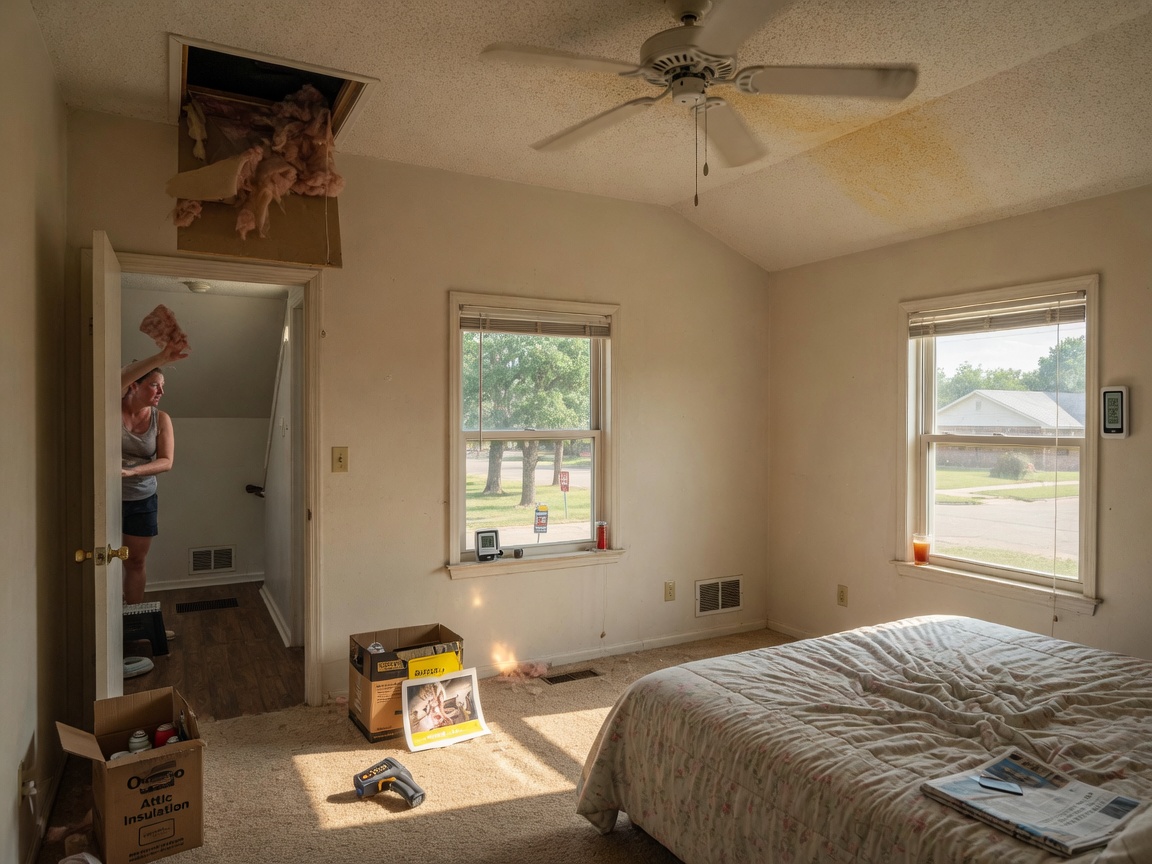
Upstairs rooms in Owasso homes stay 10–15 degrees hotter than main floors because rising heat finds gaps in attic insulation, especially during the hot summers typical of Tulsa County’s humid subtropical climate. Spray foam insulation applied to the attic deck stops that stack effect by creating a continuous air seal that lasts the life of the home.
Heat Rise Patterns in Local Housing Stock
Many homes in Downtown Owasso and Coffee Creek date to the 1980s and 1990s and feature vented attics with fiberglass that has settled or been disturbed by rodents and HVAC work. These gaps allow hot, moist air from the roof deck to push downward into living spaces once summer temperatures climb past 95 degrees. Newer builds in Stone Canyon still lose efficiency when builders leave recessed lights and plumbing penetrations unsealed. The result shows up as uneven cooling bills and rooms that feel stuffy even with the AC running. Mild winters in the area mask the problem until the first prolonged heat wave arrives, at which point homeowners notice the upstairs thermostat lagging behind the downstairs by double digits.
Attic Conditions Specific to Owasso Summers
High humidity combined with 90-plus-degree days creates a vapor drive that pushes moisture through any unsealed joints in the attic floor. Once that moisture reaches drywall it raises indoor humidity and makes the upstairs feel warmer than the actual temperature reading. Spray foam closes those joints at the source rather than adding another layer of material that can trap moisture. Homes near Redbud Park and the Owasso Sports Complex sit on flat to gently rolling terrain where afternoon sun loads the south-facing roof planes hardest, accelerating the heat gain that reaches second-floor bedrooms. Addressing the attic first prevents that load from ever entering the conditioned space.
How Attic Spray Foam Insulation Stops the Problem
Closed-cell spray foam applied directly to the underside of the roof deck in a 2-inch pass creates both insulation and an air barrier in one step. This approach works better than fiberglass batts because it adheres to rafters, wiring, and plumbing without leaving the small voids that allow heat to bypass the insulation. In Owasso homes the upgrade typically brings upstairs-to-downstairs temperature differences down to 2–4 degrees during peak summer afternoons. Homeowners in Collinsville and nearby Tulsa often combine this with attic spray foam insulation to handle both temperature and sound transmission from nearby roads.
Choosing Between Open-Cell and Closed-Cell for Local Homes
Open-cell foam offers good sound control at lower cost while still sealing air leaks, making it suitable for interior walls between floors when noise from downstairs travels upward. Closed-cell provides higher R-value per inch and acts as a vapor barrier, which helps in attics where roof leaks or ice dams could occur during rare winter cold snaps. The Open-Cell vs Closed-Cell Spray Foam: Which Is Right for Your Owasso Home? guide walks through thickness recommendations based on whether the home has a vented or unvented attic assembly. Either product outperforms loose-fill cellulose once temperatures and humidity rise together in July and August.
Practical Next Steps for Owasso Homeowners
Start by scheduling an attic inspection during business hours at 208 E 5th St, Owasso, OK 74055 to identify the largest gaps around recessed lights, HVAC boots, and top plates. Measure the existing insulation depth and note any moisture stains before work begins. Once the foam is installed, the same crew can return to check that bathroom exhaust fans still vent properly to the outside rather than into the new foam layer. This sequence keeps the fix targeted to the exact title question—why upstairs rooms stay hot and how spray foam corrects it—without adding unrelated services.