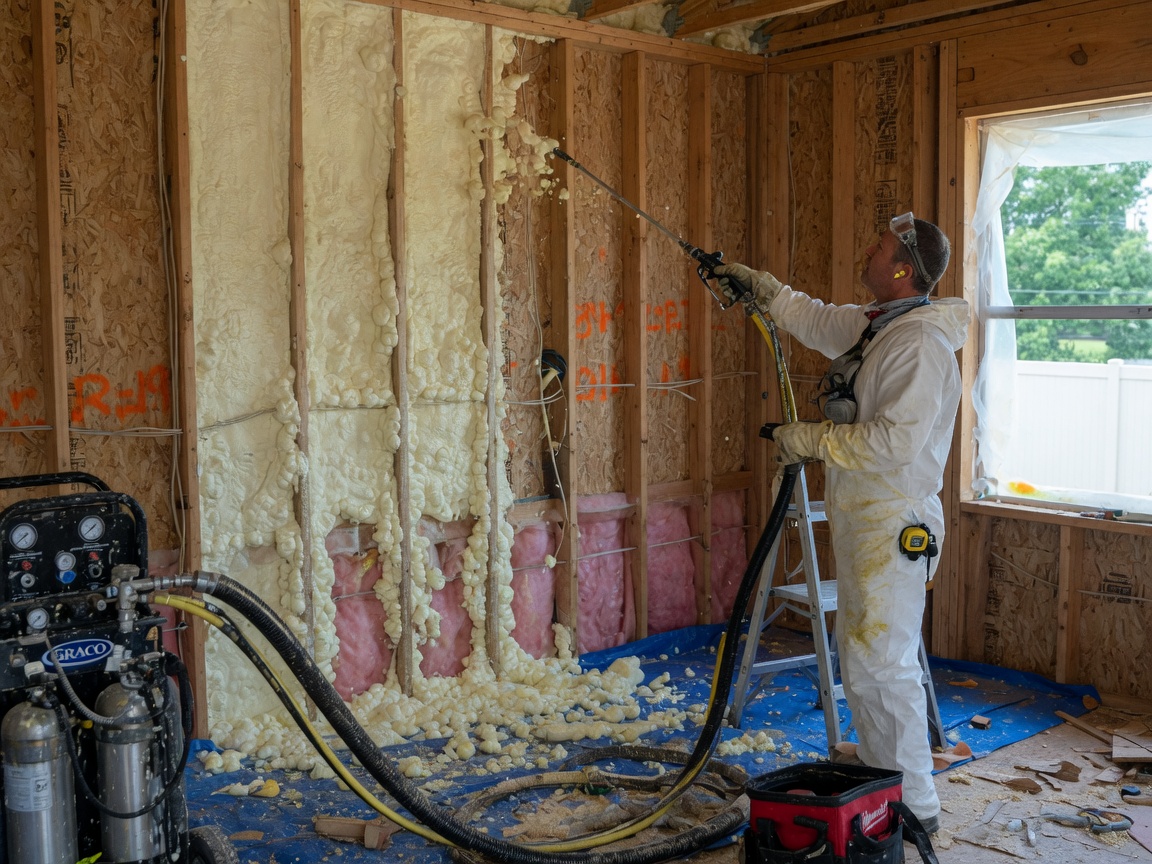
Tulsa neighborhoods near the Owasso line feature a mix of mid-century brick ranches and post-war frame homes that lose conditioned air quickly in the humid subtropical summers. Spray foam applied to attics and rim joists seals the envelope against heat gain while managing the moisture load that builds during mild winters when temperatures rarely drop far below freezing.
Crews from 208 E 5th St reach Tulsa jobs via Highway 169 and local connectors, allowing same-day assessments on properties near the county line. The work accounts for typical lot drainage patterns and the heavier tree cover that shades many Tulsa blocks, both of which influence where closed-cell foam is placed to prevent condensation on ductwork.
Homeowners in these blocks often request attic encapsulation first because the original insulation has settled and the roof decks see prolonged heat exposure once summer arrives.
Around Tulsa
We regularly work near:
- 📍Mohawk Park
- 📍Tulsa Zoo
- 📍Woodward Park
- 📍Utica Square
- 📍North Tulsa ball fields
Owasso Spray Foam Insulation in Tulsa — Local Notes
- •Many Tulsa homes built before 1970 have balloon framing that allows air to travel vertically; open-cell foam fills those cavities without disturbing plaster walls.
- •Summer humidity in Tulsa County pushes dew points high, so closed-cell foam is favored on crawlspace walls to block ground moisture migration into the living space.
- •Narrow driveways common on older Tulsa lots require smaller rig setups; the Owasso team stages equipment on street parking and runs short hose runs to keep jobs moving.
- •Mild winter nights still produce enough temperature swing to cause attic condensation on uninsulated roof sheathing, making full coverage of the underside of the deck a standard request.